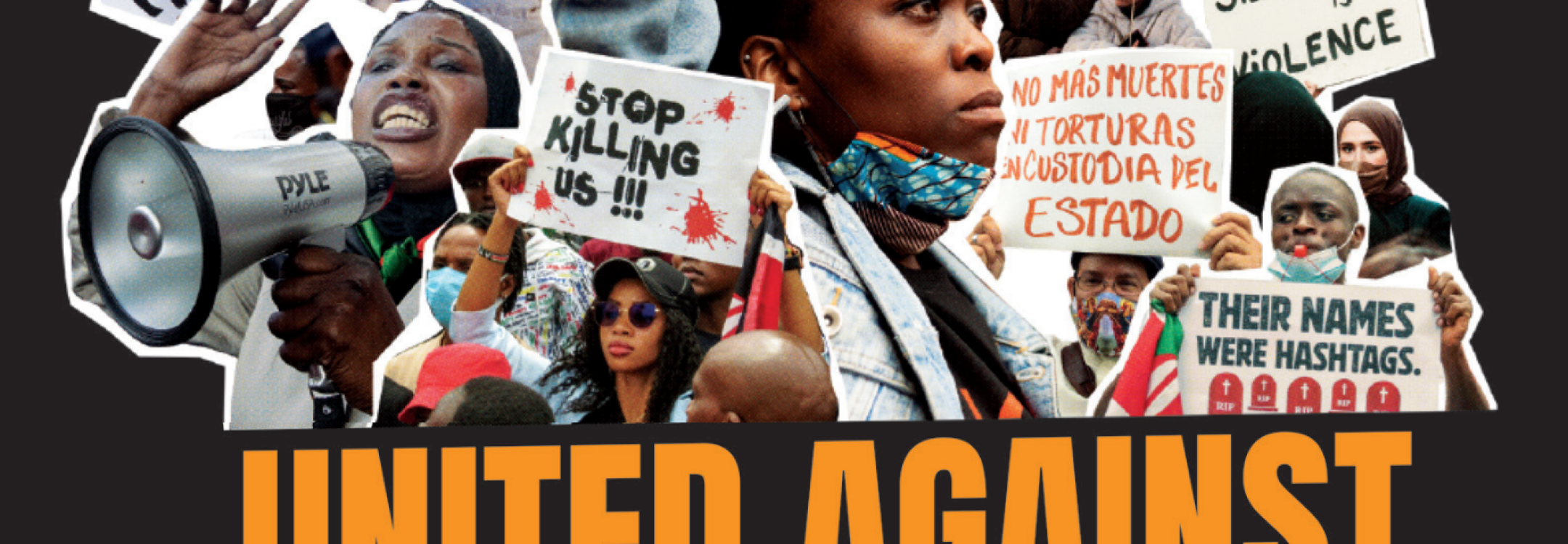
The United Against Torture Consortium (UATC) brings together six of the world’s leading anti-torture organisations with the aim to strengthen and expand the anti-torture movement by pooling their expertise in torture prevention, protection, survivor engagement and strategic litigation against torture.
The UATC harnesses the strengths of the Association for the Prevention of Torture (APT), the International Rehabilitation Council for Torture Victims (IRCT), the International Federation of Action by Christians for the Abolition of Torture (FIACAT), the Omega Research Foundation, REDRESS, and the World Organisation Against Torture (OMCT).
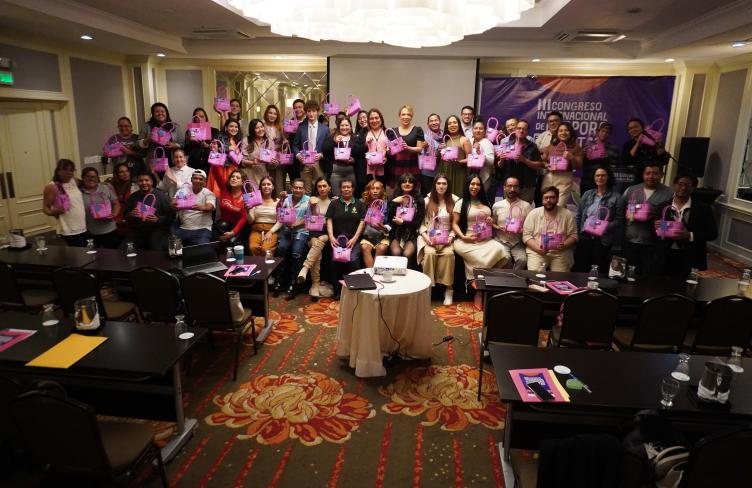
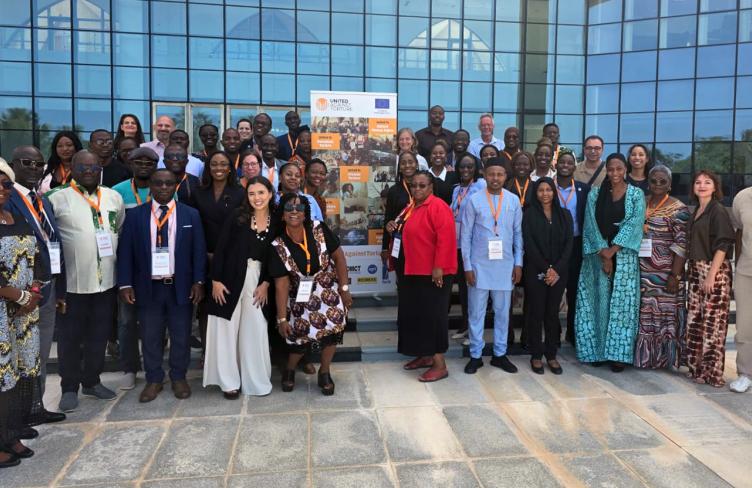
Funded by the European Union, the Consortium works in partnership with over 200 civil society organisations and other partners in more than 100 countries.
Our impact
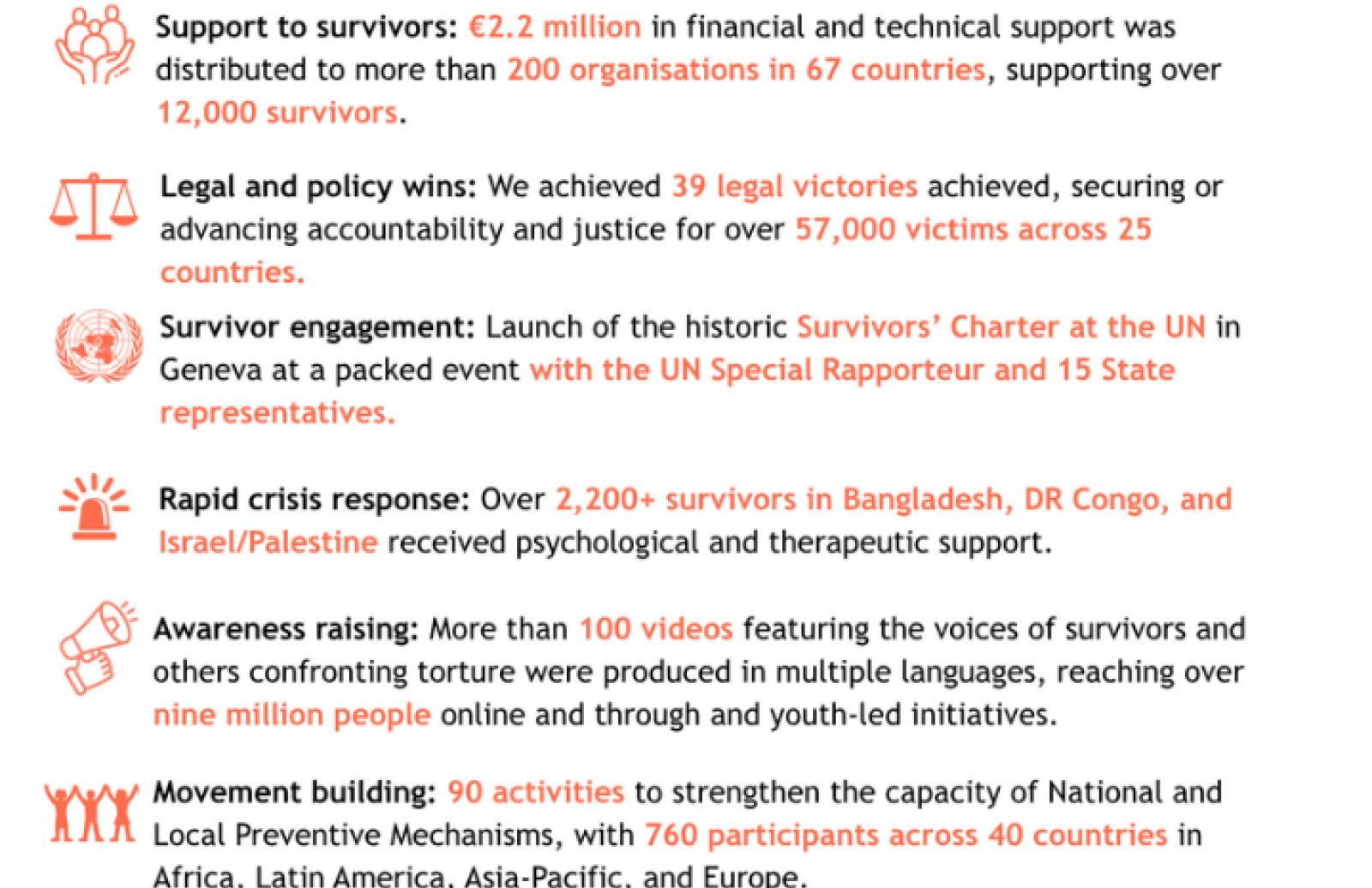
The UATC brings together expertise on prevention, protection, rehabilitation, documentation, accountability, advocacy, and movement strengthening, providing comprehensive coverage consistent with a holistic theory of change. Our theory of change contributes to the eradication of torture and other ill-treatment worldwide. It does this by strengthening a coordinated global support system for the anti-torture movement. This reflects the need for sustained, aligned action across multiple pillars. Since its formation in 2023, the UATC has built a network of members and partners across 123 countries, strengthening our ability to deliver impact through close collaboration with trusted and expert partners.
Protest Monitoring by Oversight Bodies
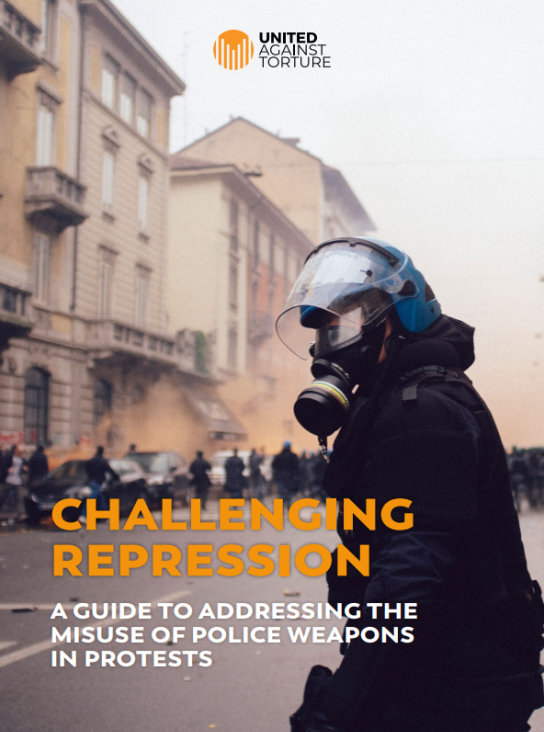
The right to freedom of peaceful assembly is an essential pillar of democratic societies based on the rule of law and human rights. Yet, in the context of rising authoritarianism and shrinking civic space, protests are too often met with violent repression and excessive use of force. Such acts by law enforcement, when they exceed what is necessary and proportionate, can amount to cruel, inhuman or degrading treatment and even torture in certain circumstances.
Monitoring protests is a vital preventive measure, which is performed by a range of actors, including National Human Rights Institutions (NHRIs), civil society organisations, human rights defenders and journalists. In some contexts, National Preventive Mechanisms (NPMs) are also involved, whether directly or by following up with people deprived of their liberty in connection with a protest.
The following Q&As with the Argentinian and French NPMs and the Togolese NHRI illustrate the diversity of models in practice and how such experiences are shaped, for example, by the structure or model of NPMs, their complementarity with other protest monitors, and their methodology.
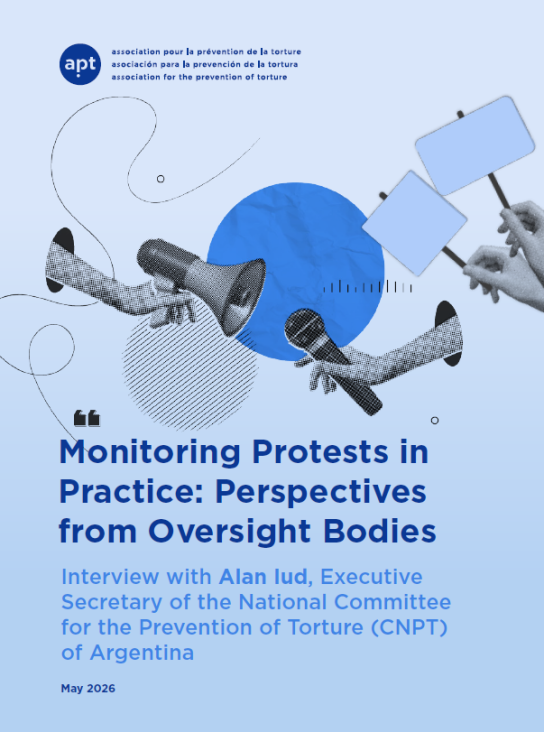
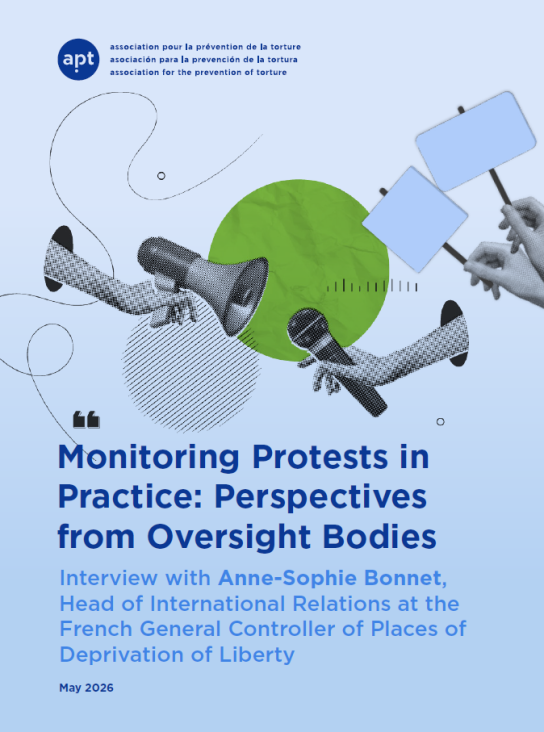
Resources