Principle 1
On foundations


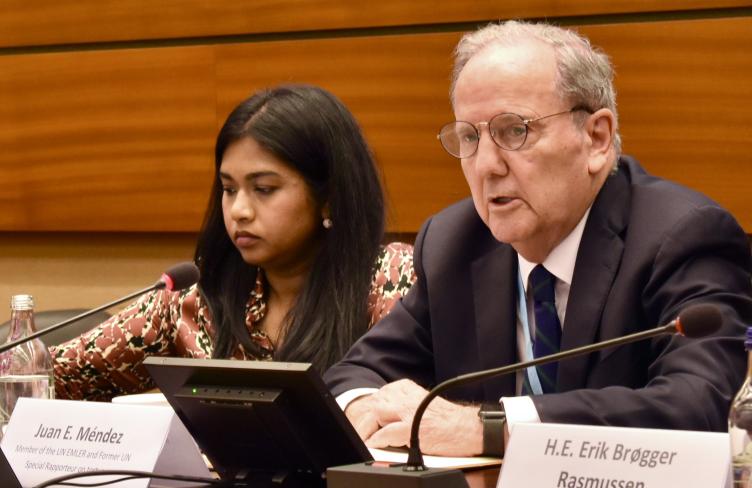
The Principles on Effective Interviewing for Investigations and Information Gathering, or the "Méndez Principles", adopted in May 2021, aim to modify practices by replacing coercive interrogations with rapport-based interviews.
Based on science, law and ethics, the Méndez Principles propose a concrete alternative to interrogation methods that rely on coercion to extract confessions. They improve the results of investigations, fully respect human rights and enhance trust in the State.
To mark the fifth anniversary of their adoption, the APT is hosting an online symposium: a series of blog articles and expert interviews that together take stock of five years of progress, examine the challenges that remain and look ahead to the next phase of implementation. Contributions come from members of the Steering Committee of Experts of the Méndez Principles, regional and thematic experts, and practitioners working at the forefront of reform. Read on below!

Effective interviewing is instructed by science, law and ethics.
Findings from empirical scientific studies, international legal standards and value-based professional duties constitute the foundations of effective interviewing. Research demonstrates that coercive methods produce false information and false confessions, while rapport-based, non-coercive methods are the most effective for gathering accurate and reliable information. These foundations are anchored in international law - including the absolute prohibition of torture and other ill-treatment, the presumption of innocence and the right to remain silent - and in the professional ethics of respect, fairness and honesty.

Effective interviewing is a comprehensive process for gathering accurate and reliable information while implementing associated legal safeguards.
Effective interviewing is a process, not a single event. It spans from the authorities' first contact with a potential interviewee, through thorough preparation and planning, the creation of a non-coercive environment and the establishment and maintenance of rapport during the interview, to the assessment and analysis of the information gathered. Legal and procedural safeguards - such as access to a lawyer, medical examination, interpretation and the full recording of the interview - must be implemented throughout.

Effective interviewing requires identifying and addressing the needs of interviewees in situations of vulnerability.
Virtually all persons being interviewed are in a situation of vulnerability due to the inherently unequal balance of power in their interactions with authorities. Some interviewees - including children, who are always in situations of heightened vulnerability - face additional risk factors relating, for instance, to age, disability, health status, immigration status or prior traumatic experiences. Authorities must assess these situations before carrying out an interview and implement enhanced protections and special measures to address the specific needs and rights of the persons concerned.

Effective interviewing is a professional undertaking that requires specific training.
Conducting effective interviews demands a distinct set of professional skills. Specific training - both theoretical and practical - is required for all personnel who conduct interviews, including law enforcement officials, intelligence and military personnel and other actors involved in investigation and information-gathering processes. Training should emphasise rapport-based interviewing methods and the implementation of legal safeguards, and training programmes should be regularly updated to reflect the evolution of international human rights standards, scientific research and techniques validated in practice. Continuous professional development enables interviewers to refine their techniques, correct errors and stay abreast of the latest relevant research.

Effective interviewing requires transparent and accountable institutions.
Transparency and accountability are essential to maintaining public confidence in an institution's integrity and the overall administration of justice. Investigative authorities should adopt and make known standard operating procedures, policies and codes of conduct for agents performing interviews, and keep their rules and practices under regular review. Effective record keeping - including the audio-visual recording of interviews - protects the interests of both the interviewer and the interviewee and facilitates the investigation of any allegations of torture or other ill-treatment. Accountability further requires the prevention and reporting of misconduct, external oversight and independent monitoring, access to effective complaints mechanisms, prompt and impartial investigations, and redress and reparations for wrongdoing.

The implementation of effective interviewing requires robust national measures.
Turning the Principles into practice requires action at the national level: incorporating them into domestic legal frameworks; transforming institutional culture and capacity away from confession-driven practices towards rapport-based interviewing; and disseminating the Principles among all relevant authorities and professionals. Judicial authorities play an essential role, by ensuring that only lawfully obtained evidence is admissible in any proceedings, remaining vigilant to any signs that a statement may have been made under coercion or ill-treatment, and applying the exclusionary rule to statements obtained through torture or other ill-treatment.