In Brazil, a prison holding only LGBTIQ+ people has invested in mental health support, more activities and more contact with family and friends to prevent self-harm and suicide. In Chile, staff are trained to ask about gender identity and sexual orientation in a respectful language designed to protect rather than expose. In Switzerland, every new prison officer completes a full day of mandatory training on the needs of LGBTIQ+ people before receiving their federal diploma.
Trans and gender-diverse people in detention often face heightened rates of violence, abuse and victimisation, from staff and from other detainees alike. Yet, protecting the rights of LGBTIQ+ people in places of detention is achievable and is already happening. The new publication by the Association for the Prevention of Torture (APT), Advancing SOGIE Rights in Detention: Promising Practices, documents practices drawing from real institutions, real case files and real interviews with the people who were involved in these reforms.
Positive changes did not happen by accident
The APT’s research shows that protection is the result of deliberate choices made by different actors.
Some of these changes were driven by courts. In Colombia, a lesbian woman in prison repeatedly denied intimate visits with her partner took her case first to the Constitutional Court, then to the Inter-American Commission on Human Rights, which found that prison authorities' decisions had been driven by prejudice, and that lower courts had compounded the harm by giving weight to those same prejudices. The resulting agreement between the Colombian state and the victim required a public ceremony of acknowledgement, broadcast to 118 prison facilities nationwide, and rewrote the country's prison regulations.
In South Africa, the Equality Court's ruling in Jade September v Mr Subramoney (2019), brought by a transgender woman denied the right to express her gender identity in prison, ordered mandatory transgender-sensitivity training for correctional staff. The country's National Preventive Mechanism, an independent oversight body with the mandate to prevent torture and ill-treatment, developed a nationwide train-the-trainer programme covering not just prisons but police services and other oversight bodies.
Some other changes were driven by administrations with no court order at all. In Chile, prison authorities adopted a resolution specifically aimed at respecting the gender identity and expression of trans people. The resolution introduces, among other measures, an admission process built around self-identification and self-declaration, with staff trained to record gender identity respectfully and prohibited from determining it unilaterally on someone's behalf. This is in line with international and regional human rights law: placement decisions should be individualised, weighing the risks to the person concerned as carefully as any risk they might pose to others. In Brazil, national judicial policy now guarantees the right to visits to LGBTIQ+ people in prison, extending recognition beyond formally registered relationships.
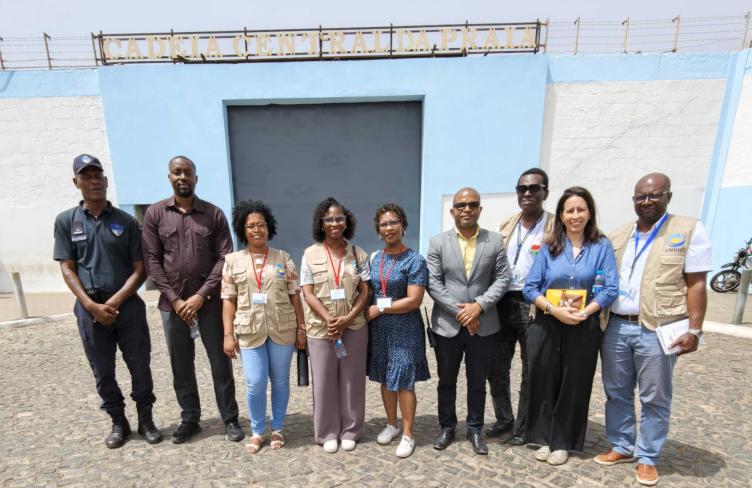
And some were driven by oversight bodies whose findings, over time, have contributed to increased visibility of the situation of LGBTIQ+ people in detention. In Peru, the national preventive mechanisms visited 23 prisons nationwide to identify LGBTI people and document their experiences, generating evidence that had previously been largely invisible. This allowed it to assess whether prison systems, policies and programmes, from complaints mechanisms to searches and intimate visits, were effectively addressing their needs. In Brazil, the national mechanism to prevent torture adopted a participatory and inclusive approach to monitoring, inviting civil society organisations and LGBTIQ+ activists to join its prison visits and contribute to assessing the conditions of detention of LGBTIQ+ people deprived of their liberty. This approach brought civil society closer to the reality of the prison system, while putting into practice the principle of “nothing about us without us”.
And behind many of these changes are the sustained efforts of civil society actors and organisations working on sexual orientation and gender identity. They are often the ones persistently pushing for change, sometimes in more visible ways, through campaigning or strategic litigation, or, in more restrictive or hostile environments, pursuing their advocacy more quietly and behind the scenes.
Regional gap
The APT research struggled to identify promising practices from all regions, especially those with higher rates of criminalisation of same sex relations. This gap itself suggests that progress and criminalisation are closely linked. Where the legal and political space to organise, litigate, monitor and document shrinks, so does our ability to know what LGBTIQ+ people in detention are actually experiencing, let alone to protect them. The report should therefore not be read as if promising examples are a sign that the hardest problems have been solved.
Uphold dignity, prevent ill-treatment, protect rights: a matter of choice
The APT's report does not argue that reform is easy, universal or complete. It argues that where the will exists, protecting the rights of LGBTIQ+ people in detention is not a matter of resources or capacity beyond reach. It is a matter of choice, sustained by courts willing to rule, governments willing to adopt and implement reforms, and oversight bodies willing to monitor.
Prison systems around the world have shown that taking steps towards advancing the rights of LGBTIQ+ people is possible: assess the individual risks and needs, listen to the people directly concerned, ensure access to healthcare, relationships and activities, train staff, allow independent monitors inside, work with civil society, prevent and investigate abuse.