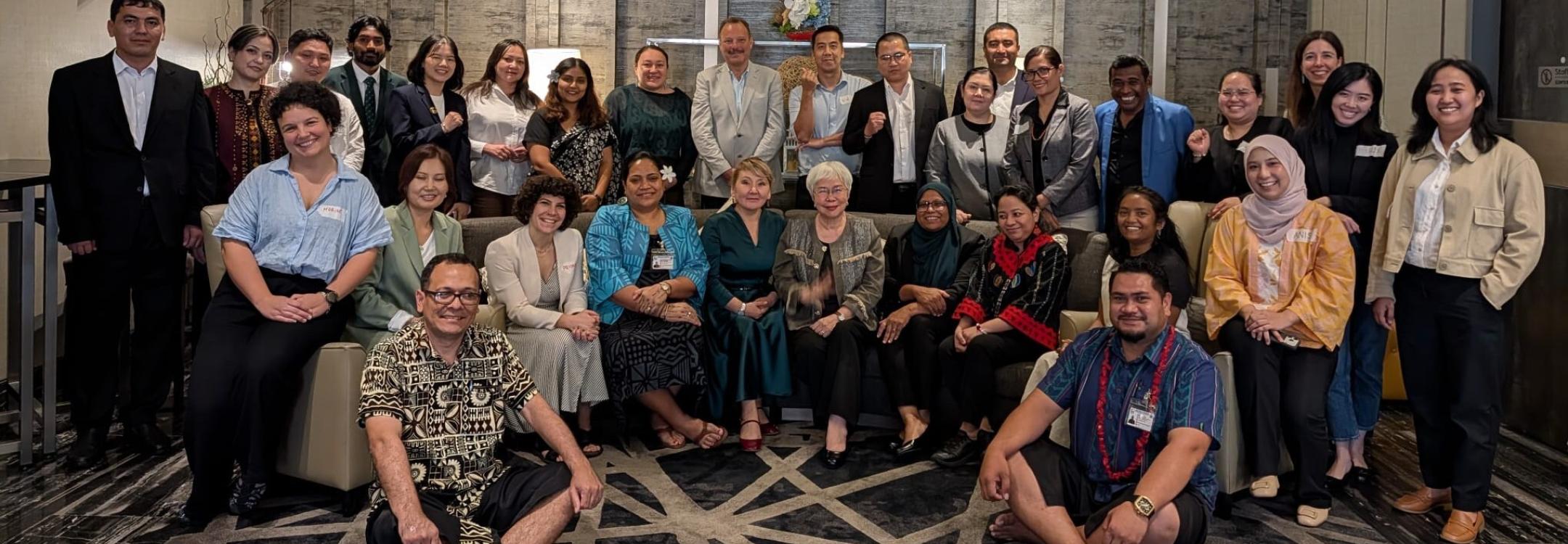
The Association for the Prevention of Torture (APT), the Asia Pacific Forum of National Human Rights Institutions (APF) and the OSCE Office for Democratic Institutions and Human Rights (ODIHR) brought together representatives of National Human Rights Institutions (NHRIs) in Bangkok, Thailand, from 20 to 22 October 2026 for a three-day regional workshop on preventing torture and ill-treatment through a gender and intersectional lens.
Participants came from Fiji, Kyrgyzstan, Malaysia, the Maldives, Mongolia, New Zealand, the Philippines, Samoa, Thailand, Timor-Leste, Turkmenistan and Uzbekistan. Before arriving in Bangkok, participants completed an online training programme based on the APF-APT guide Preventing Torture: An Operational Guide for National Human Rights Institutions.
Understanding gender-specific risks
Across the region, the number of women in prison has more than doubled since 2000. The increase is driven largely by punitive drug policies, and it is often linked to poverty, caregiving responsibilities, coercion and gender-based violence. The first day examined these gender-specific pathways to detention and the risks of torture and ill-treatment faced by women deprived of liberty. Participants explored how intersecting factors such as nationality, age, disability, ethnicity, religion, sexual orientation and gender identity can heighten these risks and create specific protection needs. They also shared practical approaches taken by NHRIs to address gender-specific risks and intersecting vulnerabilities in their monitoring work.
Discussions were anchored in the UN Rules for the Treatment of Women Prisoners and Non-custodial Measures for Women Offenders (the Bangkok Rules), adopted nearly 16 years ago as the first global standards addressing the specific needs and rights of women in prison, and drew on findings from the APT’s Global Report on Women in Prison.
From standards to practice
On the second day, participants visited the Central Women’s Correctional Institution in Bangkok, Thailand’s largest women’s prison, which holds more than 4,700 women, giving participants a first-hand view of both the realities of women’s detention and what effective support can look like. The group then travelled to the Restart Academy, an initiative of the Thailand Institute of Justice (TIJ) that supports people, and women in particular, as they reintegrate into the community after release.
The final day focused on practical skills for gender-sensitive monitoring, including planning visits, triangulating information and trauma-informed interviewing. Discussions then turned to how NHRIs can use their full mandate to drive change in laws, policies and practices.
Inspiring initiatives driven by NHIRs across the region range from public campaigns, filmmaking and amplifying the voices of women in prison, to training of prison officers, engaging with judicial actors and UN mechanisms, reviewing laws and policies, developing thematic reports, and conducting third-party interventions in landmark judicial proceedings.
Looking ahead
Participating NHRIs identified national priority areas and concrete next steps to strengthen their torture prevention work and integrate gender across their mandate. The need for further exchanges within the region was also expressed.
The APT warmly thanks its partner organisations, the APF and OSCE/ODIHR, as well the Thailand Institute of Justice (TIJ) and SHero Thailand for their expert contributions. We also thank the Central Women’s Correctional Institution for hosting the visit.
The APT looks forward to further supporting national torture prevention efforts and peer exchanges across the region.