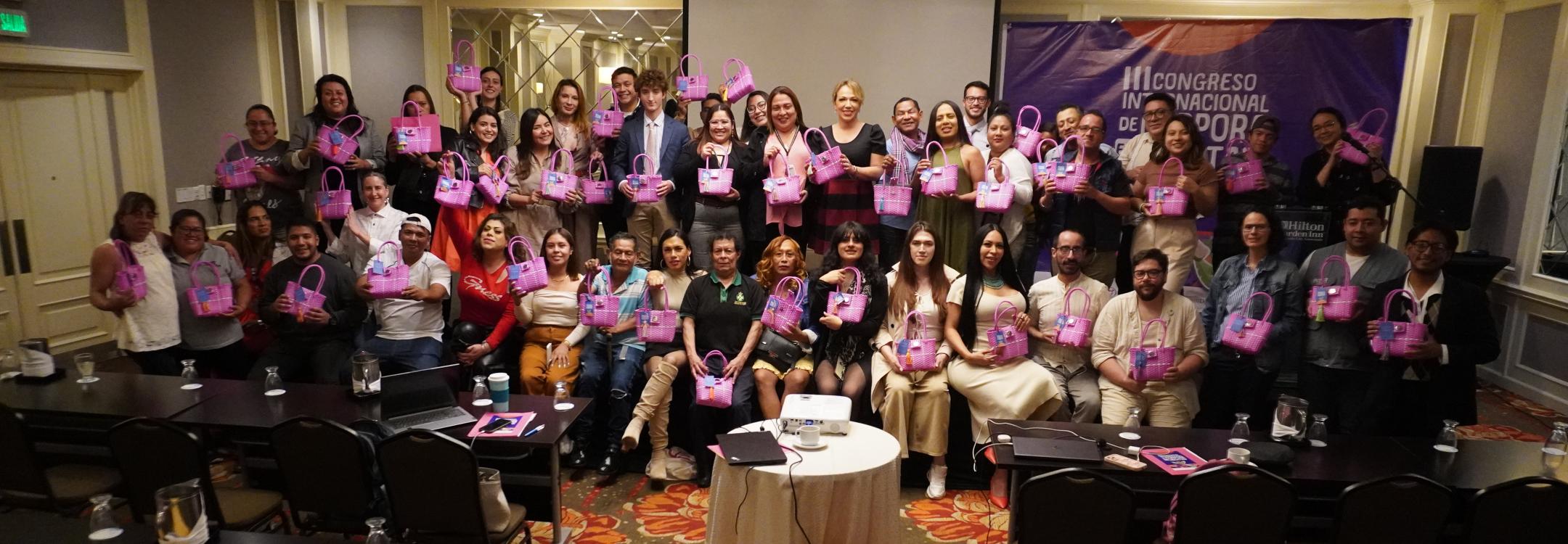
In December 2025, Guatemala City became a space of collective resistance, learning, and hope. The III International Congress of Corpora en Libertad brought together voices that too often remain silenced behind prison walls: LGBTI+ persons deprived of liberty, grassroots organisations, human rights defenders, State authorities, and international mechanisms.
From those two days emerged not only a diagnosis of injustice, but also a roadmap for change.
Across Latin America, LGBTI+ persons—particularly trans and gender-diverse people—face structural discrimination, violence, and an increased risk of torture and ill-treatment throughout the criminal justice process. These violations are not isolated incidents; they follow clear patterns, are concentrated at specific moments, and persist due to institutional failures precisely where protection is most urgently needed.
Support from the United Against Torture Consortium (UATC), through APT, marked a turning point for this Congress and for the future of Corpora en Libertad. Thanks to this backing, the Network was able to establish a direct, strategic, and sustained link with international human rights mechanisms, while maintaining a strong connection to national and local perspectives.
For the first time, a specialist from the Inter-American Commission on Human Rights (IACHR) participated in the Congress and facilitated a dedicated workshop on the Inter-American Human Rights System, with a particular focus on Advisory Opinion OC-29/22. This was not a theoretical exercise, but a practical space for exchange that equipped organisations with concrete tools to document violations, strengthen advocacy, and activate international protection mechanisms more effectively.
For Corpora en Libertad, this moment represented a turning point: moving from isolated denunciations towards sustained regional advocacy grounded in international standards. In this way, the foundations were laid for stronger and more coordinated articulation in the years ahead.
Throughout the Congress, one message was unequivocal: the first moments of detention carry the highest risk. Arrest, police custody, and initial hearings constitute the stages at which LGBTI+ persons are most exposed to abuse—humiliating searches, misuse of names and pronouns, denial of identity, lack of access to legal defence, and excessive use of force. These early violations often shape the course of subsequent proceedings and significantly increase the risk of torture and ill-treatment.
The various panels also highlighted a persistent regional reality: while normative advances exist, implementation remains the main challenge. Laws, protocols, and public policies often fail to translate into everyday practice. Limited staff training, weak oversight mechanisms, and insufficient accountability significantly constrain their real impact.
Trans persons were repeatedly identified as facing heightened and intersectional risks, both during deprivation of liberty and after release. Many are forced to choose between invisibility and violence.
Access to healthcare—particularly to appropriate, gender-affirming care and treatment—remains severely restricted in detention settings, even in countries with advanced public health systems outside prisons.
At the same time, the Congress made visible practices that do work. Independent monitoring bodies, when adequately supported, can prevent regression and promote institutional change. Grassroots organisations play a vital role: they save lives every day by providing shelter, psychosocial support, education, and pathways to reintegration for people leaving prison without support networks.
Laying the foundations for the years ahead
UATC support did not strengthen a one-off event; it invested in long-term impact.
By bringing Corpora en Libertad closer to the Inter-American Human Rights System, the Congress helped transform Advisory Opinion OC-29/22 from a legal text into an operational tool for advocacy, monitoring, and torture prevention.
It strengthened the Network’s capacity to act collectively, strategically, and transnationally, and consolidated a shared conviction: protecting LGBTI+ persons deprived of liberty requires coordinated action by States, independent monitoring mechanisms, international bodies, and civil society.
In the coming years, the seeds planted in Guatemala will continue to grow—through stronger regional advocacy, more active engagement with prevention mechanisms, and sustained pressure to ensure that dignity, equality, and protection from torture move beyond aspirations and become realities.
At Corpora en Libertad, we know that preventing torture means acting early, acting collectively, and acting alongside those who need it most. The III Congress of Corpora en Libertad demonstrated what is possible when strategic support meets collective resistance—and when, finally, wings in resistance are allowed to fly.