
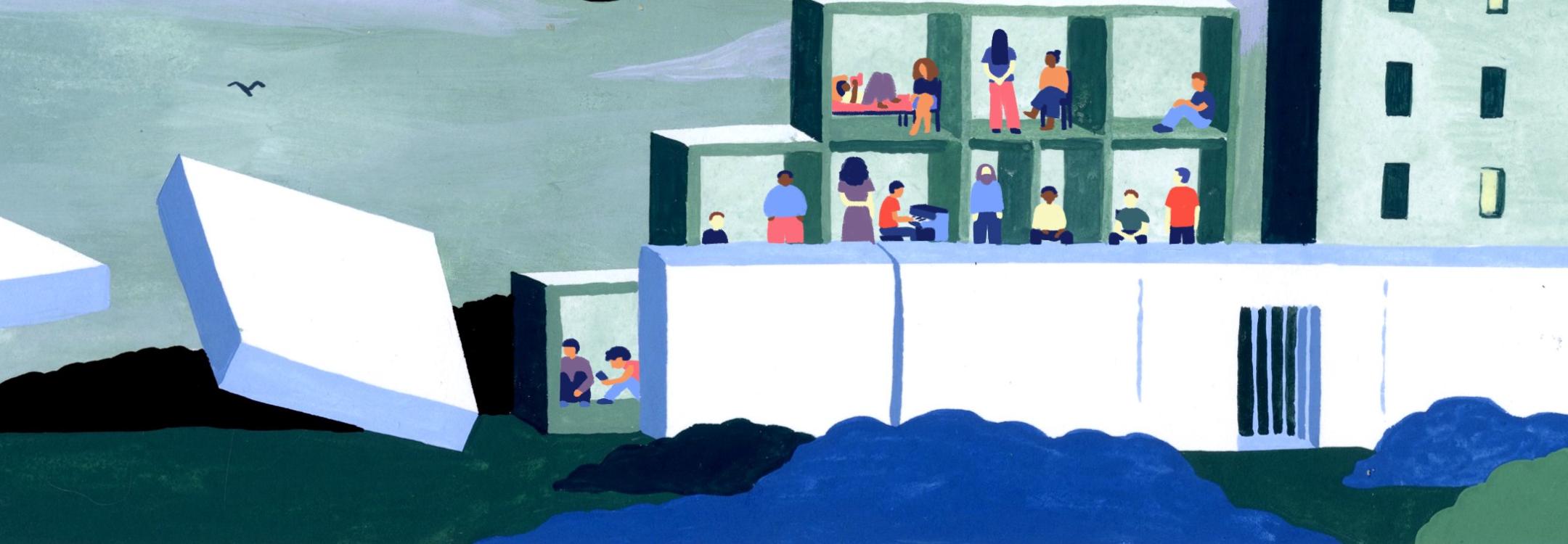
From “Les Enfermé·es”, a podcast from the « Contrôleur général des lieux de privation de liberté » (CGLPL)
Words as a primary resource
In 2025, the « Contrôleure général des lieux de privation de liberté », Dominique Simonnot, wanted to make our work more accessible by giving a voice to those who are locked up and to the professionals working in places of deprivation of liberty. She entrusted me with the production of an audio documentary in podcast form. I therefore took a microphone on eleven visits to institutions: six prisons (remand centres, detention centres, and a central prison), three secure psychiatric wards, and two administrative detention centres. Producing this in-house allowed us to retain a great deal of freedom in tone and approach.
The testimony of people encountered by monitors during visits to places of deprivation of liberty is the primary resource they rely on to carry out their mission. They observe, take photographs, study documents, inspect equipment and infrastructure, but above all: they listen. The voices of professionals, external workers, persons deprived of liberty, and sometimes their relatives, provide a unique collective testimony that is indispensable. The statements of different individuals sometimes contradict each other, often converge, and it is the CGLPL’s role to establish an objective account of the functioning and dysfunctions that these testimonies reveal.
Dear inspectors, I hereby request a meeting with you during your time at the establishment. Hoping for a favourable response from you.
In the same vein, the CGLPL pays particular attention to the roughly 3,000 letters it receives each year. These come primarily from persons deprived of liberty, but also from any other interested parties (lawyers, family members, associations, for example). These letters provide an additional source of information and a means of expression for people experiencing or witnessing deprivation of liberty.
I wish to initiate correspondence with your services and open a dialogue. I am embarking on a path where I know well that I will get hit hard. This does not frighten me. I want to speak to you about certain illogical and incomprehensible aspects in the way a sentence is executed.
These voices form the foundation of the CGLPL’s preventive work. While they are often reflected in its visit reports, opinions, or thematic reports, the voices of those deprived of liberty had never before been directly heard through the “Contrôleur general” themselves. Two documentary filmmakers had previously explored this path in 2011 and 2020, following visits by the first two “contrôleurs généraux”, Jean-Marie Delarue1 and Adeline Hazan2, and explaining their methodology. The podcast “Les Enfermé·es” continues this approach, giving extensive space to direct testimonies from those inside these institutions, who took hold of the microphone themselves.
Entering with a microphone
Here is how we proceeded. First, it was necessary to define a scope. For this series, we focused on “long-stay” institutions, excluding, for instance, police custody facilities or airport holding areas. Filming was also limited to facilities housing adults, to facilitate obtaining consent. These choices do not preclude the possibility of future projects with children or in short-stay institutions.
Given the unprecedented nature of the approach, we chose to inform the relevant ministries in advance. While monitoring teams are authorised to retain any equipment they deem useful during their visits (phones, computers, cameras, measuring devices, etc.), the use of a recording device was entirely new.
CGLPL visits are unannounced, so institutions were not forewarned. Nevertheless, the reception of the project was always very positive. I had prepared a charter outlining the documentary’s objectives and guiding principles, which I explained at the start of each visit and throughout. Among these principles, I paid particular attention to protecting the anonymity of those who agreed to be recorded.
Beyond the walls, making the reality of confinement heard
I conducted nearly one hundred interviews, centred on a few open-ended questions, allowing persons to speak as freely as possible about their experiences. As in any reportage, some themes initially anticipated were confirmed, while others evolved during filming. The final topics cover prisons, psychiatric hospitals and administrative detention centres: the first days of confinement, life behind four walls, communal spaces, isolation, “public” areas, and release. Working across the shared issues of confinement — within institutions with very different functions and organisation — made this work particularly compelling.
The vast majority of people encountered during visits immediately volunteered to be recorded. Some needed a few days to consider before returning. Others, persons deprived of liberty or professionals, were hesitant to speak, which is significant. Speaking to an independent torture-prevention mechanism is, in itself, a serious and sometimes weighty act. Its consequences are not always known to the CGLPL. I met people who shared intimate and often painful testimonies, and I am deeply grateful for their trust.
In this documentary, speaking out also had a broader dimension. It was an extremely rare opportunity in these closed spaces to be heard beyond the walls. On several occasions, we felt that people were addressing not so much the CGLPL as the wider public who would eventually listen.
When I saw there was a form with people participating, I spoke to those I talk to during walks, saying it would be good to discuss and explain what happens and the conditions in which we are received, and they told me ‘it’s good that you can speak for us’ because some are too afraid to step forward, to dare to speak, they might fear reactions after mentioning what goes wrong, so I speak on behalf of all the newcomers, it’s not just about my case.
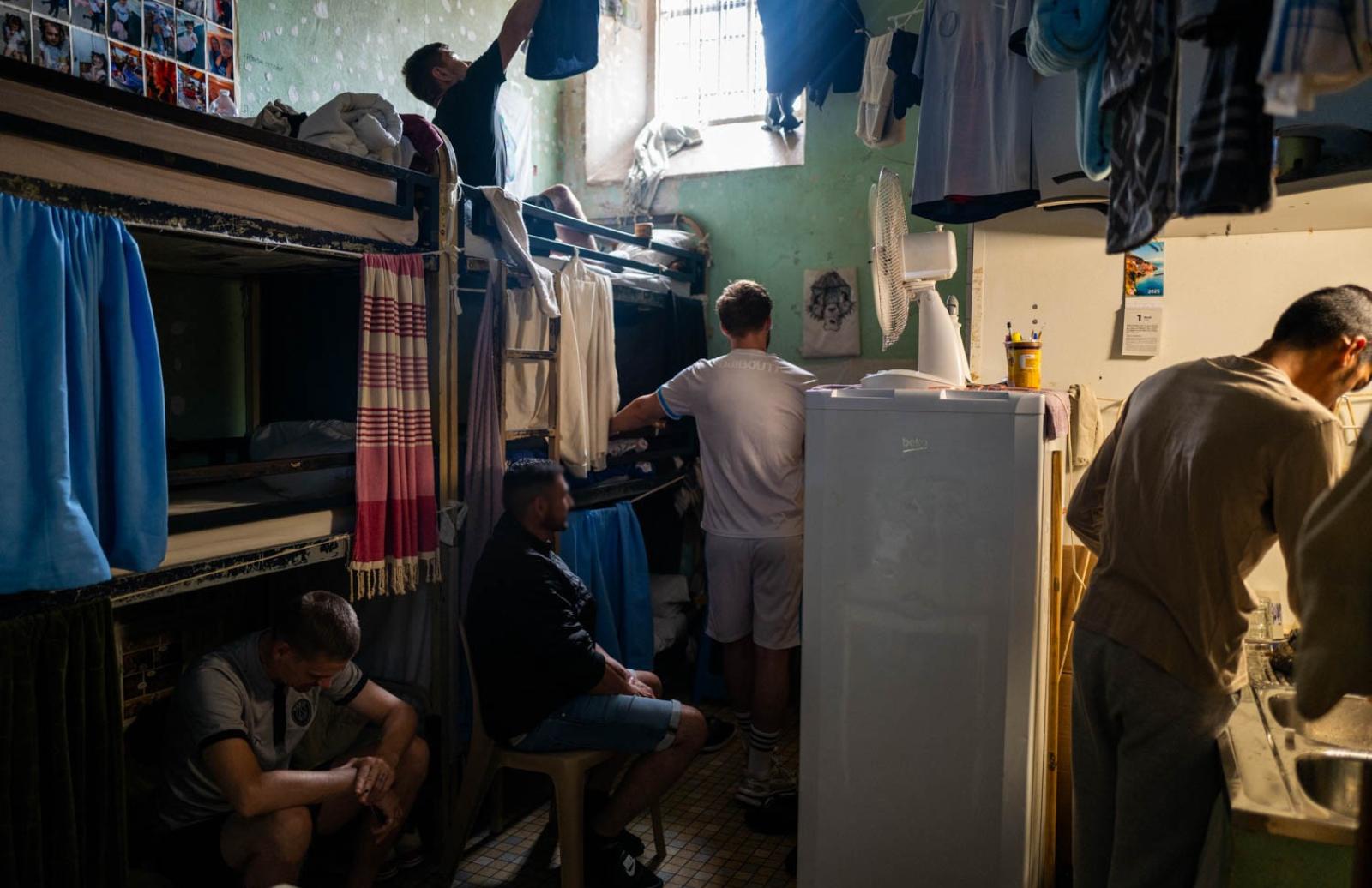
Being able to inform the general public, to tell people what it’s like. A psychiatric ward is striking, but it would certainly be less so if it were more open.
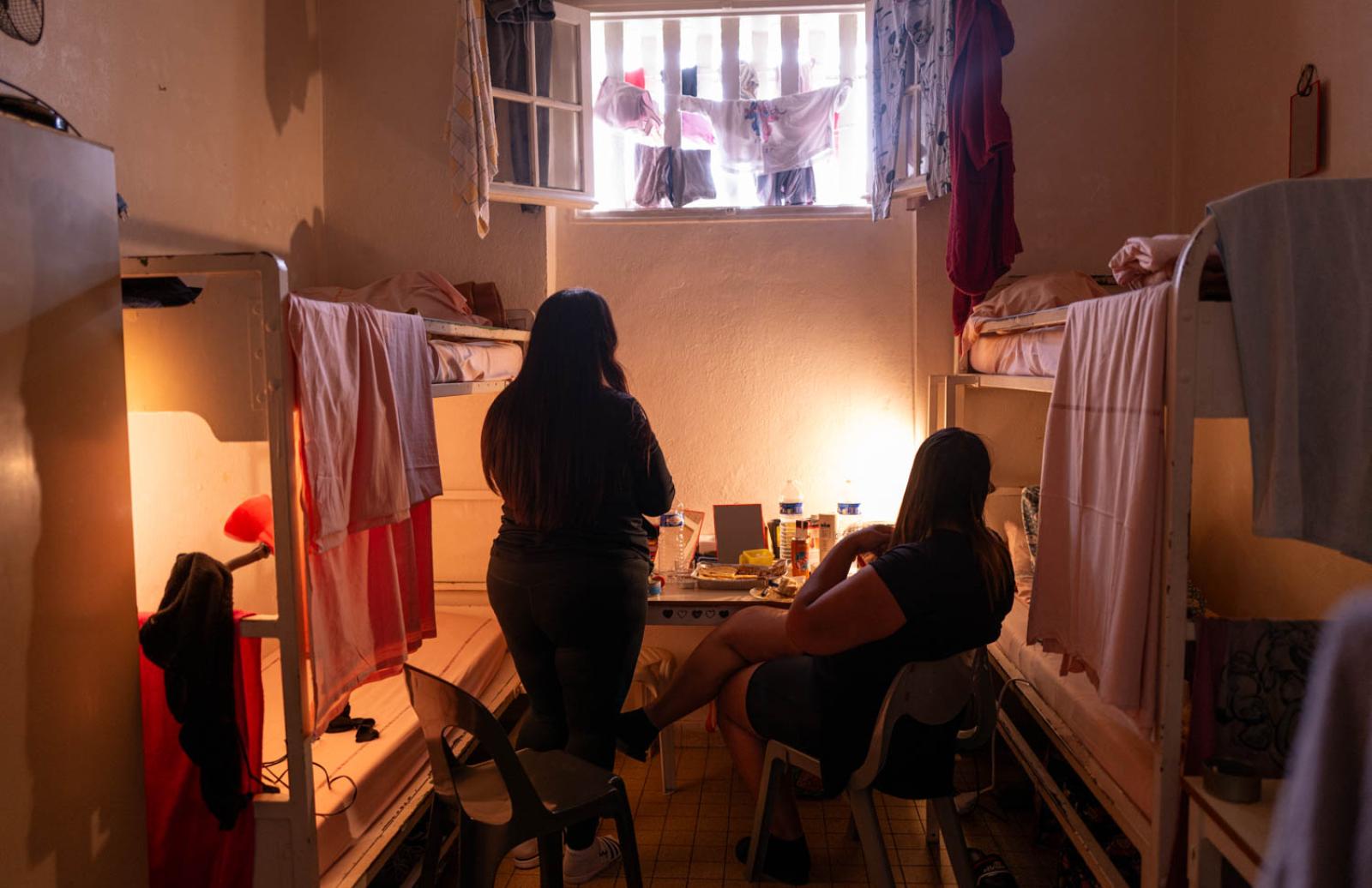
Finally, what radio allows more than CGLPL reports is conveying the atmosphere of deprivation of liberty. This documentary lets the voices of those encountered on site be heard, but also, in a sense, the voices of the walls themselves. Perhaps what strikes most immediately when entering a place of deprivation of liberty is the characteristic sounds and atmosphere of confinement. The podcast enables this immersion.
Now I’m used to it, but it’s true that I get a knot in my stomach every time I wake up: the peephole, the iron bed, the smell of the iron bed, the sound of turning keys — these are things that stick with you
Released on 19 November 2025 on streaming platforms, “Les Enfermé·es” aims to give the general public a more direct, vivid understanding of the CGLPL’s mission and the functioning of the places it monitor. This audio journey, complementing the CGLPL’s other work, invites reflection on what confinement reveals about our society, through the voices of those most directly affected.
Author : Mari Goicoechea, CGLPL Monitor
Graphics : Rosalie Stroesser
Photographs : Karine Bizard